


2026 UK Vape Tax
Published on 2025-12-07 10:24:24 by Muhammed
The New Vaping Products Duty
The Vaping Products Duty is a new UK excise duty applied to liquids intended for use in vape devices. The full legal framework is published on GOV.UK in HMRC’s guidance for vaping products duty. The duty begins on 1 October 2026, and from that date all taxable vape liquids supplied in the UK must follow the new rules.
Importantly, the vape tax is charged at a single flat rate per millilitre, regardless of nicotine strength. That means the total duty depends on how much liquid the product contains, not whether it contains nicotine or how strong it is. For you, the practical outcome is simple: the duty will be built into the retail price you see.
HMRC uses a broad definition of what counts as “vape liquid” for duty purposes. In general, the duty applies to liquid that is intended for use in vaping devices (and is not a medical or tobacco product). This includes nicotine salts, e-liquids, shortfills, and 0mg liquids. Nicotine-free liquids are included because the duty is based on intended use, not nicotine content. From October 2026, vape liquids supplied for sale in the UK fall within the Vaping Products Duty rules.
The duty applies to bottled liquids and prefilled formats such as pods and cartridges. Single-use disposable vapes were banned from sale in the UK from 1 June 2025, so they will not be legally available at retail level when the vape tax begins in 2026. In practice, this means the consumer impact of the duty is focused on refillable products, bottled liquids, and lawful pod systems.
When Does the Vape Tax Start?
The UK vape tax (Vaping Products Duty) officially starts on 1 October 2026. From that point, vaping products released for sale in the UK will need to follow the new duty rules and move through compliant supply chains. You may notice packaging changes primarily to accommodate the vaping duty stamp and related anti-tamper/security requirements as manufacturers and retailers transition to the new system.
Products Covered by the Vape Tax
In practice, the duty applies to the vape liquids you already buy and use, including 10ml bottles, shortfills, nicotine salt liquids, and the liquid inside prefilled pods. If a product is sold to be used in a vape device, it falls within the scope of the Vaping Products Duty.
Why Nicotine-Free Liquids Are Included
Nicotine-free liquids are included because the vape tax is based on how the liquid is used, not whether it contains nicotine. This ensures all vape liquids are treated consistently and prevents gaps where some products avoid duty simply because of their formulation.
Why Has the UK Introduced a Vape Liquid Tax?
The UK has introduced a tax on vape liquid as part of a broader plan to regulate the pricing, supply, and control of vape products from 2026. Government departments have linked the new Vaping Products Duty to several aims, including reducing youth access, creating a clear tax category for vape liquids, and ensuring the vaping sector consistently contributes to public revenue.
One of the most frequently cited reasons for the policy is concern around youth vaping. Ministers have stated that pricing is one of several factors that can influence access to vape products, and that applying a duty to vape liquids may reduce the appeal of certain products to underage users. For adults who buy vape liquids legally, the duty operates as a volume-based tax, meaning the total cost increases with the amount purchased rather than the nicotine strength.
Public health organisations have also commented on the policy context. For example, the health charity ASH has discussed the vape tax alongside tobacco duty changes when outlining why price-based controls are being introduced, focusing on regulation and market oversight rather than individual health advice. Their perspective is reflected in ASH’s statement on tax increases on tobacco and vape liquids, which places the duty within a broader policy framework.
Another key aim of the vape tax is to bring vape liquids into a defined excise duty structure. Before this change, vape liquids sat outside established nicotine duty systems. The new framework gives HMRC a consistent method for taxing all vape liquids based on liquid volume, regardless of format, flavour, or nicotine content. This simplifies enforcement, improves transparency, and aligns vape liquids with other regulated nicotine products.
Overall, government statements present the duty as one part of a wider regulatory approach that includes age restrictions, product standards, and packaging rules. The vape tax itself is framed less as an individual health intervention and more as a pricing and regulatory tool within a broader control strategy. At the same time, introducing a dedicated tax structure creates a clearer and more predictable system for manufacturers, retailers, and consumers, while ensuring vape liquids are regulated in line with other controlled nicotine products.
Vape Tax Rates Explained
The UK vape tax is applied using a single flat rate, rather than different rates based on nicotine strength. This means there are no tiers or bands for low-, medium-, or high-strength liquids. Instead, the Vaping Products Duty is charged purely on the amount of liquid in a product.
The table below shows how the vape tax is structured and how the rate is applied. It does not compare nicotine strengths, because nicotine content does not affect the duty. Whether a liquid contains nicotine or is 0mg, the same per-ml rate applies.
UK Vape Tax Rate Table
This table shows that the vape tax is consistent across all products. The only factor that changes how much duty you pay is volume. A product with more liquid will include more duty, but the rate itself never changes.
| Vape Tax Measure | What It Means |
|---|---|
| Vaping Products Duty | £2.20 per 10ml of vape liquid |
| Per-millilitre rate | £0.22 per ml |
| Nicotine strength | No impact on duty |
| Product formats covered | Bottles, shortfills, pods, cartridges |
How the Vape Tax Is Worked Out
Although you won’t need to calculate the tax yourself when buying vape liquids, the formula is straightforward:
Vape tax = total millilitres × £0.22
For example, a 10ml bottle includes £2.20 in duty, while a 50ml shortfill includes £11.00. The per-ml rate stays the same in both cases.
Once the duty comes into force in October 2026, retailers will include the correct vape tax in the shelf price. The price you see already reflects the duty for that product’s liquid volume.
How Vape Tax Affects Devices and Liquids
The UK vape tax affects different products differently, not because of nicotine strength, but because each format contains a different amount of vape liquid. Under the Vaping Products Duty, the tax is charged at a flat rate per millilitre, meaning the total duty applied depends entirely on how much liquid is used over time.
This section summarises how the vape tax applies across common product types so you can see where price changes may be more noticeable once the duty begins in October 2026.
| Product type | What the vape tax applies to | What this means for price impact |
|---|---|---|
| Disposable vapes | Single-use disposable vapes were banned from sale in the UK from 1 June 2025, so they will not be legally available at retail when the vape tax starts. | In practice, disposables are not expected to be consumer-facing under the vape tax system. If disposable-style products were supplied after the ban, duty would apply to the liquid by volume, but sale would be unlawful—so the real impact is on legal refillables, pods, and bottled liquids. |
| Big-puff and multi-chamber devices | Duty applies to the total liquid volume, not how it’s split across chambers (often 2ml per chamber). | Even if the device divides liquid into multiple sealed pods/chambers, the tax adds up based on total ml used. More total liquid over time = more duty built into refills. |
| Prefilled pods | Duty applies to the liquid inside the pod (often 2ml per pod). | Each pod attracts duty based on volume (e.g., a 2ml pod includes £0.44 in duty). If you use multiple pods weekly, duty scales with total liquid consumed. The pod hardware itself isn’t taxed—only the liquid is. |
| 10ml nicotine salt bottles | Duty applies to 10ml of liquid at the flat per-ml rate. | Each 10ml bottle includes £2.20 in duty regardless of nicotine strength. If you buy these regularly, the duty becomes more noticeable because it applies to every bottle purchased. |
| 10ml freebase liquids | Taxed the same way as nicotine salts. | Each 10ml bottle carries £2.20 in duty regardless of nicotine content. Lower-strength freebase isn’t taxed at a lower rate; only volume changes the duty. |
| Shortfills | Duty applies to large liquid volumes (often 50ml or 100ml). | Shortfills attract higher total duty: 50ml includes £11.00 and 100ml includes £22.00. Even 0mg shortfills are taxable because the duty applies to any liquid made for vaping. They can still work out better value per ml than buying multiple small bottles, despite higher upfront duty. |
| Zero-nicotine liquids | Included because HMRC defines taxable products by intended use, not ingredients. | There’s no reduced rate for 0mg liquids. They are taxed at the same per-ml rate as all vape liquids, so total duty depends only on volume. |
| Refillable vape kits | The device isn’t taxed (kit, tank, coil, battery). | The tax applies only to the liquid you buy. Refillable systems give more control over how much liquid you consume and what bottle sizes you choose, which makes your likely duty cost easier to predict. |
Who Does the Vape Tax Affect Most?
The financial impact of the UK vape tax depends on how much vape liquid you use over time, rather than the nicotine strength of the liquid itself. Because the Vaping Products Duty is charged at a flat rate per millilitre, people who use larger volumes of liquid will see a greater overall increase than those who vape smaller amounts.
This means the effect of the vape tax varies based on product format, frequency of use, and bottle size, rather than the type of nicotine or strength you choose.
Most Affected by the Vape Tax
You are likely to feel the vape tax more if you use products that involve higher overall liquid consumption. This includes people who regularly use multiple prefilled pods each week, large-capacity pod systems, or high-volume refillable setups.
Frequent users who go through several 10ml bottles, pods, or large shortfills will see the duty add up more quickly because the tax applies to every millilitre purchased. Over time, higher liquid usage results in a higher total amount of duty being built into retail prices.
Users who prefer formats that are replaced often, such as pod refills, may also notice the change more clearly, as the duty is applied repeatedly across multiple purchases rather than in one larger bottle.
Least Affected by the Vape Tax
You are likely to be less affected by the vape tax if your overall liquid use is lower. This includes people who vape less frequently or use products that consume less liquid over time.
Users of refillable kits who manage their usage carefully may find the impact easier to predict, as they can choose bottle sizes that suit their routine. While zero-nicotine and lower-strength liquids are still taxed, they are not charged at a reduced rate, instead, the lower overall impact comes from using less liquid, not from nicotine content.
Because the duty is volume-based, controlling how much liquid you use is the main factor in managing how the vape tax affects your spending.
UK Vape Tax – How to Keep Costs Down
The UK vape tax introduces a new cost structure for all vape liquids, but you can still manage how the duty affects your spending by understanding how it is applied. Because the Vaping Products Duty is charged at a flat rate per millilitre, the total cost impact depends on how much liquid you buy and use over time. The practical goal is to focus on volume and buying habits, while staying fully compliant once the new duty begins.
One of the simplest ways to keep more control is using refillable vape kits. Because the vape tax applies only to the liquid and not the device, refillables let you choose bottle sizes that match your usage and make your costs easier to predict than formats that require frequent replacement of small, fixed-volume refills.
It also helps to manage liquid usage rather than focusing on nicotine strength. Under the UK vape tax, nicotine strength does not affect the amount of duty charged, so the key driver is total liquid consumption. If your routine uses less liquid overall, the total amount of duty built into your purchases will be lower. This is simply an observation about how the tax works, not guidance to change your nicotine preferences.
When buying liquids, comparing cost per ml can make a noticeable difference. Shortfills and larger bottles contain more liquid, so they include more total duty, but they can still work out cheaper per ml than buying multiple smaller bottles. Looking beyond the headline price and doing a quick per-ml comparison can help you spot better-value options under the new system.
Finally, smart buying under the vape tax means sticking with compliant UK retailers. Once the duty begins, legitimate sellers will include the tax in their prices, and buying through regulated channels helps you avoid the risks linked to non-compliant or unregulated products. Planning around bottle size and your typical usage is usually the most reliable way to stay in control of costs as the new rules take effect.
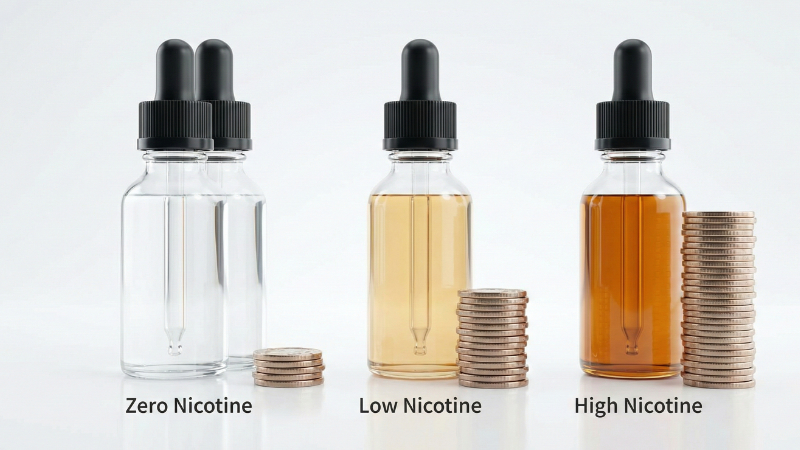
UK Vape Tax – Is Vaping Still Cheaper Than Smoking
The introduction of the UK vape tax in October 2026 increases the cost of vape liquids, but it does not remove the wider cost difference between vaping and smoking. Cigarettes already sit within one of the most heavily taxed product categories in the UK, reflecting long-established tobacco duty structures that apply to combustible products. In comparison, vape liquids are taxed using a more limited, volume-based approach.
The Vaping Products Duty applies per millilitre of liquid, meaning the total impact depends on how much liquid a person uses over time. While this does raise the price of vaping compared with the current system, the overall tax burden remains lower than that applied to cigarettes. Tobacco products are subject to multiple layers of duty alongside VAT, which significantly increases their final retail price.
From a practical perspective, vaping costs are more directly linked to usage patterns. Someone who uses smaller amounts of liquid will experience a lower overall impact than someone who uses large volumes regularly. This makes the financial effect of the vape tax more predictable and controllable than the cost of smoking, where tax levels are fixed per product regardless of consumption habits.
Vaping vs Smoking Costs After 2026
Cigarettes are taxed through established tobacco duty systems designed specifically for combustible goods. These systems apply consistently to every pack sold, which means ongoing smoking costs remain high regardless of individual usage patterns.
By contrast, vape liquids are taxed only on liquid volume. Even after the new duty begins, the overall spend on vaping is typically lower than smoking for many adult users, particularly when liquid consumption is managed carefully.
Why Vape Duty Is Lower Than Tobacco Duty
Vape liquids are treated differently under UK tax policy because they are non-combustible products. The volume-based duty reflects their format rather than mirroring the higher rates applied to tobacco. This policy distinction explains why vaping remains taxed at a lower level than smoking, even after the introduction of the vape tax.
How the UK Vape Tax Compares Internationally
The UK vape tax introduces a structured duty on vape liquids, and similar systems already exist in many other countries. Looking at how different regions tax vaping helps show where the UK sits internationally. The UK model applies a flat per-millilitre duty on all vape liquids, regardless of nicotine strength, making it relatively predictable because the duty is tied to liquid volume rather than retail price or formulation.
Internationally, approaches vary. Some countries apply lower per-ml charges, while others impose significantly higher taxes or use percentage-based systems that can lead to larger price increases depending on product cost. The table below keeps the comparison at a high level, because overseas rules and figures can change between budget cycles and policy updates.
| Region | How vape tax is typically set | How it compares with the UK approach |
|---|---|---|
| United Kingdom | A flat duty per millilitre on all vape liquids, regardless of nicotine strength. | Predictable and consistent because duty depends on volume only, not price or formulation. |
| EU countries | Taxation varies widely: some use a flat per-ml charge; others combine volume-based duties with additional levies. Some countries tax vape liquids, while others may not, and proposals can change (for example, France has debated introducing a tax in the context of its 2026 budget, with proposals facing opposition). | Not uniform across the EU, so comparisons are context only. In some countries the per-ml duty is lower than the UK rate; in others it is similar or higher, especially where extra fees apply. A key difference is the UK has one national rate. |
| Crown Dependencies and nearby jurisdictions (example: Guernsey) | As self-governing jurisdictions, they set their own tax policies. Guernsey has discussed introducing a vaping liquid duty during 2026 at £2.20 per 10ml. | Any duty may differ from the UK in both structure and rate, and products supplied there may follow local rules rather than UK duty frameworks. |
| United States | No national vape tax; individual states set their own rules. Some use per-ml duties, while others apply percentage-based taxes on wholesale or retail prices. | Can be much higher or much lower than the UK depending on location. Compared with the US patchwork, the UK’s flat per-ml system is more consistent and easier for consumers to understand. |
Vape Duty Stamps, Packaging and Compliance
The UK vape tax introduces a new compliance system that requires all taxable vape liquids to carry official duty stamps and meet related packaging security requirements from October 2026.
Duty stamps and related packaging security requirements will apply to vape liquids sold in bottles, pods, and cartridges that are legally available for sale. Compliance focuses on duty being paid at the correct point in the supply chain and on products carrying the required stamp before retail sale.
What Duty Stamps Are
Vaping duty stamps are small, highly secure labels that must be attached to the outermost retail packaging (the box, or the bottle if sold without a box). The stamp must seal the packaging so the product cannot be opened without damaging the stamp and packaging.
HMRC has also described a transitional stamp (for a limited period) that includes physical security features but not the digital scanning feature.
Key dates: from 1 October 2026, duty must be paid and stamps attached when products are packaged for retail sale; from 1 April 2027, it becomes an offence to sell vaping products without a stamp (unless in duty suspension).
Although duty stamps start to apply from 1 October 2026, HMRC allows a six-month grace period (to 31 March 2027) for older stock. From 1 April 2027 it becomes an offence to sell unstamped vaping products outside duty suspension.
Vape Tax Packaging Changes After 2026
From October 2026, retail vaping products will need to accommodate the vaping duty stamp and related security and anti-tamper requirements. In practice, this means you may notice changes to outer packaging design so the stamp can be applied correctly and the pack can be sealed.
Separately, vape products must continue to meet existing UK labelling and product information rules under the Tobacco and Related Products Regulations 2016 (TRPR).
Vape Tax and Retailer Compliance
Buying from compliant retailers ensures the vape liquids you receive meet all legal requirements. Retailers must only sell duty-paid products with correct labelling and packaging that accommodates the duty stamp and anti-tamper/security requirements. This protects you from unregulated or non-compliant liquids once the vape tax is in effect.
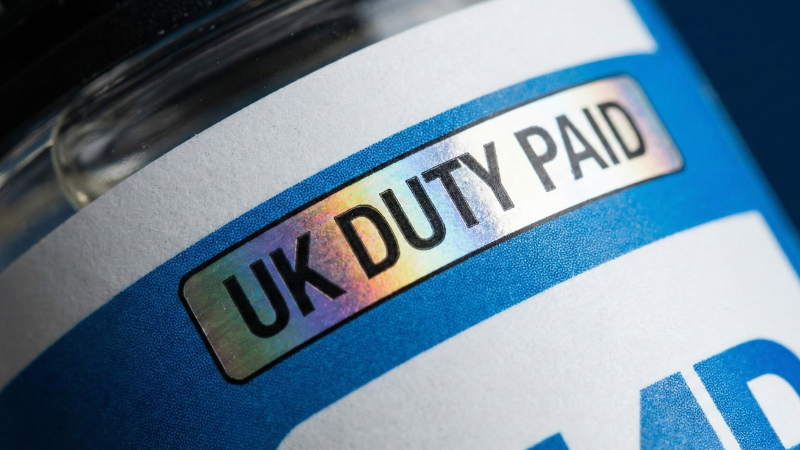
What the UK Vape Tax Means for Vape Big
The UK vape tax introduces duty stamps and related packaging security requirements for taxable vape liquids sold from October 2026. Vape Big will continue to follow HMRC rules, alongside existing Tobacco and Related Products Regulations 2016 (TRPR) and age-verification standards.
The duty applies only to the liquid inside a product, not the device itself. Vape Big will ensure every liquid listed is lawful, clearly labelled, and compliant with HMRC requirements.
Vape Big will continue to supply only compliant products for adult customers. This includes stocking duty-paid vape liquids, displaying accurate volume and nicotine information, and using regulated supply chains that meet HMRC standards. The goal is to give you clarity and confidence when buying vape liquids under the new tax system.
When the duty begins, you can expect packaging changes primarily to accommodate duty stamps and related anti-tamper/security requirements. Prices will reflect the vape tax built into the liquid you buy, but the shopping experience remains the same: compliant, regulated, and focused on adult customers.
FAQs on the 2026 UK Vape Tax
Below you’ll find clear answers to the most common questions people have about the new vape tax and what it means for you.
What is the vape tax, and who does it apply to?
The vape tax is a new UK excise duty on liquids intended for use in vape devices. It applies to both nicotine and nicotine-free vape liquids sold in bottles, pods, and cartridges. The duty is based on the total amount of liquid in a product, not its nicotine strength.
When will the vape tax start?
The duty begins on 1 October 2026. From that date, all taxable vape liquids sold in the UK must comply with HMRC rules, including correct duty payment, compliant packaging, and, where required, the correct duty stamp.
How much is the tax on vape products?
The vape tax is charged at a flat rate per millilitre. The confirmed rate is £2.20 per 10ml, which equals 22p per ml. The total duty applied depends solely on the amount of liquid the product contains.
Will disposables be more expensive?
Single-use disposable vapes were banned from sale in the UK from 1 June 2025, so they will not be legally available at retail level when the vape tax begins in 2026. As a result, disposables are not expected to be part of the consumer-facing vape tax system.
Are shortfills affected by the new duty?
Yes. Shortfills are included because the duty applies to any liquid formulated for vaping. Because shortfills contain more liquid than a standard 10ml bottle, they attract a higher total amount of duty, even when sold as 0mg.
Will nicotine-free liquids be taxed?
Yes. Nicotine-free liquids are taxed in the same way as all other vape liquids. The duty is based on intended use and liquid volume, not nicotine content.
Will the tax affect prefilled pod systems?
Yes. Prefilled pods are taxed based on the amount of liquid they contain. Each pod includes duty calculated using the flat per-ml rate, which is built into the retail price.
Does the tax apply to vape kits or hardware?
No. The vape tax applies only to the liquid. Vape kits, devices, tanks, coils, chargers, and batteries are not taxed unless they contain prefilled liquid.
Why is the government introducing the vape tax?
Government sources link the duty to youth-access concerns, improved regulation of the vape market, and the creation of a clear tax framework for vape liquids. The duty also ensures vape products contribute to public revenue in a consistent way.
Will vaping still be cheaper than smoking?
In most cases, yes. Cigarettes are subject to significantly higher tobacco duties and VAT. Even with the new vape tax, vaping generally remains the lower-cost option from a financial perspective.
Are retailers required to use duty stamps?
Yes. HMRC requires duty stamps on taxable vape liquids. These are small, highly secure physical labels applied to the outermost retail packaging (the box, or the bottle if sold without a box) and are used to show the duty has been accounted for under the Vaping Products Duty system. Although duty stamps start to apply from 1 October 2026, HMRC allows a six-month grace period (to 31 March 2027) for older stock. From 1 April 2027 it becomes an offence to sell unstamped vaping products outside duty suspension.
Should vapers stock up before the 2026 deadline?
The decision is personal. The duty applies to taxable vape liquids from 1 October 2026, so understanding how much liquid you use and which formats you buy can help you plan ahead.

Muhammed is the founder and CEO of Vape Big, a premier online retailer specializing in top-quality vaping products and accessories. Beyond his pivotal role in leading the company, he is deeply passionate about vaping and dedicated to helping people transition from harmful tobacco products to safer, more enjoyable alternatives. With years of expertise in the vaping industry, Muhammed stays at the forefront of the latest trends, technologies, and innovations, ensuring Vape Big continues to set the standard for excellence.

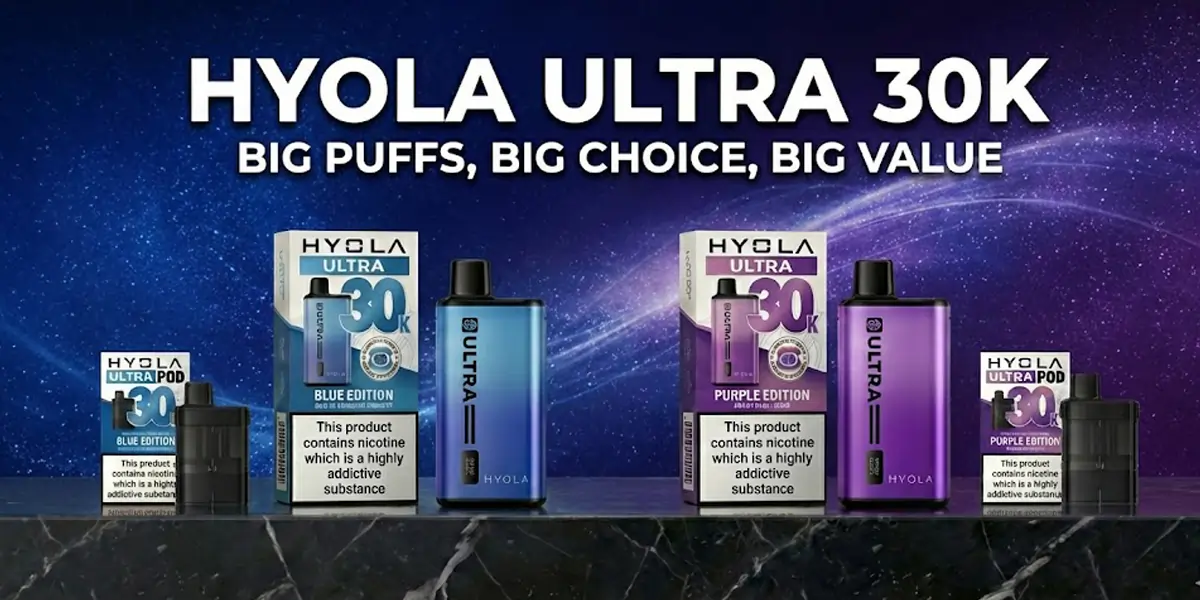
The Hyola Ultra 30K is built around one simple idea: longer use without overthinking your device. Instead of swapping disposables every few days, this kit stretches usage across weeks while keeping flavour consistent from start to finish. The dual flavour setup adds variety so you do not get bored halfway through a tank, and the refill system keeps running costs lower over time. Many UK users now look for practicality rather than novelty, and this device fits that shift perfectly. You still get the familiar mouth-to-lung feel people enjoy, but with a smoother draw and steadier vapour output. For heavy vapers, it reduces constant replacements, and for casual users, it becomes a dependable everyday companion that just keeps working.
By parthshah | 16-02-2026 11:30 AM

The HQD Glow Air 70K Vape Kit genuinely feels like a step forward for everyday vaping in the UK, especially for people who are tired of replacing short-life devices all the time. Instead of chasing small size or flashy ideas, this kit is clearly built around what regular vapers actually care about: day-to-day reliability, long use and a setup that simply works without effort.
By parthshah | 06-02-2026 06:46 AM
In this review, we take a deep look at how the Pyne Pod Click 50K Vape Kit performs in real-world use. From its massive puff count to flavour delivery power modes and usability, this guide breaks down what makes the device stand out and whether it truly lives up to the promise of ultra-long-lasting vaping.
By parthshah | 30-01-2026 12:04 PM

The IVG Pro 12 has quickly become a popular choice among vapers looking for a refillable pod system that is easy to use and reliable for everyday vaping. Designed as a step up from disposable vapes, it offers a smoother, more consistent experience while allowing users the freedom to choose their own e-liquids and nicotine strengths. With its compact design, refillable pods, and focus on flavour performance, the IVG Pro 12 appeals to both beginners and experienced vapers who want a practical and long-term vaping solution without unnecessary complexity.
By parthshah | 27-01-2026 06:25 AM